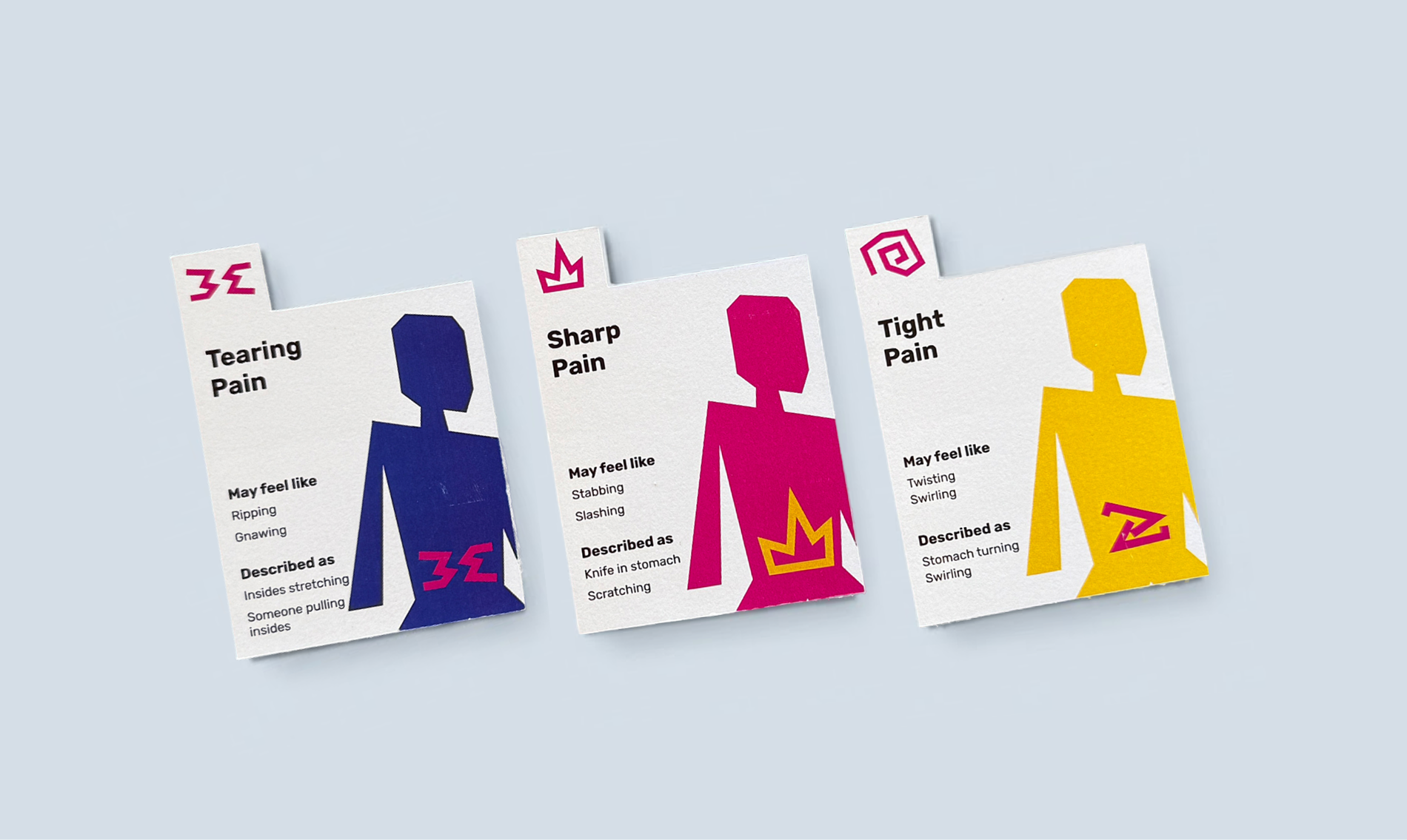
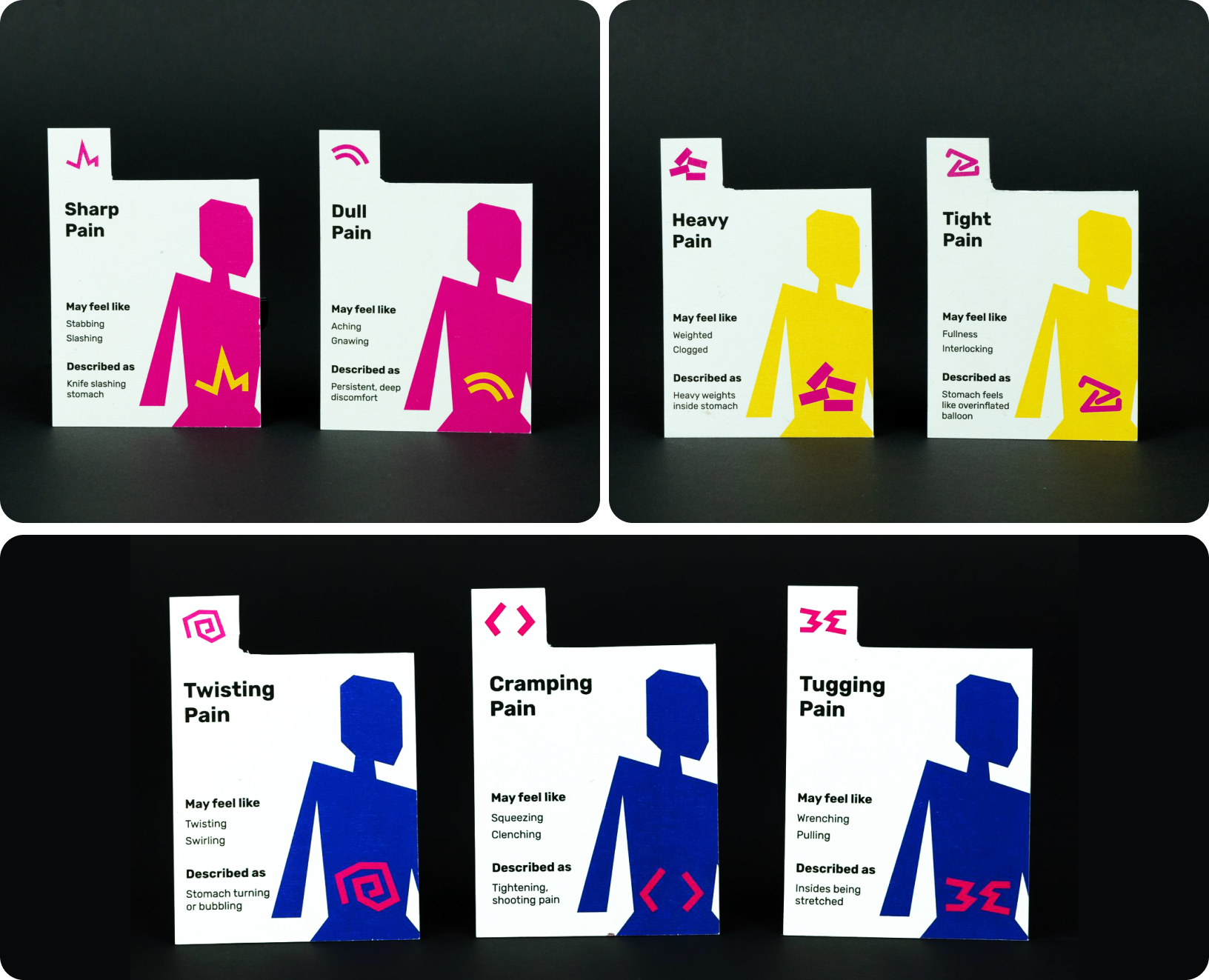
GPs typically have only a few minutes with each patient, and many struggle to articulate pain in words. Interviews with 9 patients and 8 healthcare professionals showed patients frequently arrived either over-prepared, contesting a diagnosis with prior online research, or under-prepared, unsure what to say. Short appointment times compounded both patterns, weakening trust on both sides. Research was narrowed to focus on self-diagnosis: how patients interpret and act on health information before and during a visit. Secondary research indicated that communication quality and time spent together were the strongest levers for trust. Journey mapping confirmed that most trust breakdowns occurred during the appointment itself rather than beforehand, reframing self-diagnosis as a symptom of patients not feeling heard, rather than a standalone problem to solve. Two early concepts, a pre-appointment reflection tool and a digital AI-paired symptom visualiser, were prototyped and tested, then dropped: both felt impersonal or introduced a layer between patient and doctor rather than improving the conversation itself. A survey of 47 people who had struggled to describe pain identified abdominal pain as the most common issue, and found that while no respondents had used a visual method to communicate pain to a doctor, they readily did so in a workshop setting. This surfaced a clear opportunity for a low-tech, visual tool used directly in the consultation room. The resulting design is a set of physical cards, one per pain type such as sharp, burning, or referred, loosely grounded in clinical pain categories. Each card displays an icon and descriptive words on the front, with only the icon on the back, allowing patients to select cards by sight. Colour and iconography were tested for colour-blind accessibility, with tactile and Braille elements planned for future iterations. A usability test with 6 participants simulating a GP visit showed that patients could accurately select and categorise pain cards, even without prior exposure to the icons. Feedback from two practising anaesthesiologists validated the core concept, noting that pain is highly subjective and often dismissed, and that a shared visual vocabulary could reduce that dismissal and support patients facing language barriers.